Arabic alphabet resources‚ including PDF charts and worksheets‚ are readily available for learners seeking foundational knowledge of this beautiful script.
These materials often present each letter‚ its name‚ and pronunciation‚ alongside Islamic vocabulary for enhanced learning.
Furthermore‚ PDF versions of the Noorani Qaida offer guidance on basic Tajweed rules‚ crucial for accurate Quranic recitation.
Historical Development of the Arabic Script
The origins of the Arabic script can be traced back to the Nabataean Aramaic alphabet‚ a script used by the Nabataean Arabs in the ancient world. Over centuries‚ this script evolved‚ influenced by various factors including regional variations and the need for a more adaptable writing system.
Early forms of Arabic script lacked the distinct dotting system used today to differentiate between letters with similar shapes. This led to ambiguities‚ prompting the development of standardized forms during the 7th century CE‚ largely attributed to the efforts of scholars like Abu al-Aswad al-Du’ali.
PDF resources detailing this history often showcase the progression from early scripts like Hijazi to more refined styles like Kufic and Naskh. The adoption of Islam played a pivotal role‚ as the Quran demanded a precise and legible script for its preservation. Consequently‚ the Arabic script became a cornerstone of Islamic culture and scholarship‚ with numerous calligraphic styles emerging over time‚ documented in various PDF guides.
These historical PDF documents illustrate the script’s journey.
The Arabic Alphabet and its Place in Semitic Languages
The Arabic alphabet belongs to the family of Semitic scripts‚ sharing common ancestry with Hebrew‚ Aramaic‚ and Phoenician. These scripts all derive from a Proto-Sinaitic script‚ making them related despite their individual evolutions.
A key characteristic of Semitic alphabets is their abjad nature – primarily representing consonants‚ with vowels often implied or indicated by diacritics. The Arabic alphabet follows this pattern‚ with 28 basic consonant letters. PDF charts often highlight these shared features and demonstrate the relationships between letters across different Semitic languages.

PDF comparative analyses reveal how sounds have shifted and letters have adapted over time within each language branch. The Arabic script‚ in particular‚ developed unique features like its cursive style and the distinct shapes letters take depending on their position within a word. Resources in PDF format frequently illustrate these positional variations‚ emphasizing the script’s complexity and beauty within the broader Semitic linguistic landscape.
Understanding this lineage aids learning.

The 28 Letters of the Arabic Alphabet
PDF resources comprehensively list all 28 letters‚ presenting their names‚ isolated forms‚ and transliterations for learners to master the script effectively.
Letter Names and Order (Alif to Ya)
PDF charts detailing the Arabic alphabet consistently present the letters in their traditional order‚ beginning with Alif and concluding with Ya. These resources meticulously list each letter alongside its corresponding name‚ aiding memorization and pronunciation.
Many PDF guides emphasize that the sequence isn’t merely arbitrary; it’s rooted in the phonetic characteristics of the letters. For instance‚ the initial letters often represent glottal sounds‚ progressing towards more complex consonant formations. Visual aids within these PDFs frequently showcase the letter’s isolated form‚ alongside its position within a word – initial‚ medial‚ and final.
Furthermore‚ some PDF documents incorporate mnemonic devices or associations to help learners remember the order. Understanding this sequential arrangement is fundamental‚ as it underpins the reading and writing process in Arabic. Comprehensive PDF booklets often include exercises to reinforce the letter names and their correct order‚ solidifying foundational knowledge for beginners.
Consonants and Vowels in the Arabic Alphabet
PDF resources on the Arabic alphabet clearly differentiate between consonants and vowels‚ though the system differs from English. Arabic primarily features consonants‚ with vowels often indicated by diacritical marks – Fatha‚ Kasra‚ and Damma – detailed in many PDF guides.
These PDF charts illustrate that most letters represent consonant sounds‚ and their forms change depending on their position within a word. Vowel sounds aren’t typically represented by dedicated letters but by these short vowel markings above or below the consonant.
Advanced PDF materials also cover long vowels‚ formed by combining consonants with Alif or Ya. Understanding this interplay between consonants and vowel markings is crucial for accurate pronunciation and reading comprehension. PDF worksheets often include exercises focusing on identifying and applying these vowel marks‚ building a strong phonetic foundation.

Letter Forms and Positional Variations
PDF guides demonstrate that Arabic letters adopt different shapes – isolated‚ initial‚ medial‚ and final – impacting word formation and readability.
These variations are crucial for correct writing and are thoroughly illustrated in available PDF resources.
Isolated Form
PDF resources dedicated to the Arabic alphabet consistently emphasize the importance of understanding each letter’s isolated form‚ as it serves as the foundational shape for recognizing and learning the script.
This form represents the letter when it is not connected to any adjacent letters‚ standing alone as a distinct character.
Many PDF charts specifically showcase each of the 28 letters in their isolated state‚ often accompanied by their names and transliterations to aid pronunciation.
These charts are invaluable for beginners‚ providing a clear visual reference point for each letter before tackling the complexities of connected forms.
Worksheets‚ frequently available as PDF downloads‚ often begin with exercises focused solely on recognizing and tracing the isolated forms‚ reinforcing muscle memory and visual identification.
Understanding the isolated form is not merely about memorization; it’s about grasping the fundamental building block upon which all other letter variations are based‚ a concept clearly presented in comprehensive PDF guides.
Furthermore‚ some PDF materials include examples of simple words constructed using only letters in their isolated forms‚ providing a gentle introduction to basic word construction.
Initial Form
PDF guides on the Arabic alphabet dedicate significant attention to the initial form of each letter‚ explaining how the shape changes when appearing at the beginning of a word.
Unlike the isolated form‚ the initial form often involves modifications to the letter’s structure‚ impacting its visual appearance and requiring dedicated practice.
Comprehensive PDF charts illustrate these changes‚ presenting each letter alongside its isolated‚ initial‚ medial‚ and final forms for easy comparison.
Worksheets‚ commonly found as PDF downloads‚ feature exercises specifically designed to familiarize learners with recognizing and writing letters in their initial position.
These exercises often involve filling in missing letters at the beginning of words or tracing initial forms to develop proper stroke order.

Understanding the initial form is crucial for accurate reading and writing‚ as misidentifying a letter in this position can alter the meaning of a word‚ a point emphasized in detailed PDF tutorials.
Many PDF resources also highlight letters that maintain their isolated form even when initial‚ simplifying the learning process for beginners.
Medial Form
PDF resources dedicated to the Arabic alphabet consistently emphasize the medial form‚ as it often presents the most significant alteration from the isolated shape.
When a letter appears in the middle of a word‚ it typically loses its ascender or descender‚ and its connections to neighboring letters become crucial.
Detailed PDF charts showcase these transformations‚ providing a visual guide to the medial form of each of the 28 letters.
Many downloadable PDF worksheets focus on practicing writing letters in the medial position‚ often requiring students to complete words with missing medial letters.
These exercises reinforce the understanding of how letters connect and change shape within a word.
PDF guides often explain the concept of letter linking‚ highlighting how certain letters connect seamlessly while others require a slight gap.
Mastering the medial form is essential for fluent reading and accurate handwriting‚ and PDF materials provide structured practice to achieve this proficiency.
Final Form
PDF guides dedicated to the Arabic alphabet meticulously illustrate the final form of each letter‚ a crucial aspect of mastering the script’s fluidity.
When a letter concludes a word‚ it frequently undergoes a distinct shape change‚ often losing loops or extending horizontally to facilitate connection.
Comprehensive PDF charts visually demonstrate these transformations‚ allowing learners to easily compare the isolated‚ initial‚ medial‚ and final forms.
Numerous downloadable PDF worksheets concentrate on practicing writing letters specifically in the final position‚ often within complete words.
These exercises reinforce the recognition and accurate formation of the final letter shapes.
PDF resources often highlight letters that maintain their shape in the final position versus those that undergo significant alterations.
Understanding the final form is paramount for both accurate reading and legible handwriting‚ and PDF materials offer targeted practice to build this skill.
Arabic Alphabet Pronunciation Guide
PDF guides provide detailed pronunciation instructions‚ including consonant sounds and short vowel markings like Fatha‚ Kasra‚ and Damma‚ for accurate articulation.
Pronunciation of Consonants
Arabic consonants‚ detailed in many PDF pronunciation guides‚ present unique challenges for English speakers. Some sounds directly correspond to English counterparts‚ like ‘b’‚ ‘m’‚ and ‘f’‚ simplifying initial learning.
However‚ several consonants lack direct English equivalents‚ requiring focused practice. These include emphatic consonants – ‘ṣ’‚ ‘ḍ’‚ ‘ṭ’‚ ‘ẓ’ – produced with a constriction in the pharynx‚ creating a “heavy” sound. Similarly‚ ‘ḥ’ represents a voiceless pharyngeal fricative‚ and ‘ʿ’ is a voiced pharyngeal stop‚ both unfamiliar to most English speakers.
PDF charts often illustrate the correct tongue and mouth positions for these sounds. Mastering these distinctions is vital for accurate pronunciation and comprehension. Resources emphasize listening to native speakers and mimicking their articulation.
Furthermore‚ the pronunciation of consonants can subtly change depending on their surrounding vowels and position within a word‚ a nuance often highlighted in comprehensive PDF learning materials. Consistent practice using audio resources alongside visual PDF guides is key to achieving fluency.
Pronunciation of Short Vowels (Fatha‚ Kasra‚ Damma)
Arabic short vowels‚ represented by diacritical marks – fatha‚ kasra‚ and damma – are crucial for correct pronunciation‚ often detailed in PDF learning resources. Unlike English vowels‚ these are typically brief and not fully pronounced in isolation.
Fatha ( َ ) indicates a short ‘a’ sound‚ as in “cat”. Kasra ( ِ ) represents a short ‘i’ sound‚ similar to “bit”. Damma ( ُ ) signifies a short ‘u’ sound‚ akin to “put”. Many PDF guides visually demonstrate these marks above or below the consonants.
Understanding these vowels is essential because they significantly alter a word’s meaning. PDF charts frequently include examples illustrating how different vowel combinations change pronunciation. Mastering these sounds requires attentive listening and repetition‚ often aided by accompanying audio files available alongside the PDF materials.
Beginner resources often emphasize recognizing and producing these vowel sounds before tackling more complex pronunciation challenges‚ ensuring a solid foundation in Arabic phonetics.

Resources for Learning the Arabic Alphabet
Arabic alphabet PDF charts‚ colouring worksheets‚ and the Noorani Qaida are freely available online‚ aiding pronunciation and memorization for learners.
Arabic Alphabet Charts (PDF Downloads)
Arabic alphabet charts in PDF format are invaluable tools for beginners‚ offering a comprehensive visual guide to the script’s letters and their corresponding sounds.
These downloadable resources typically showcase each of the 28 letters‚ presenting them in their isolated form alongside their names and transliterations.
Many charts also include pronunciation guides‚ assisting learners in mastering the correct articulation of each consonant and vowel.
Furthermore‚ some PDF charts illustrate the different positional forms of each letter – initial‚ medial‚ final‚ and isolated – which is crucial for reading and writing Arabic correctly.
Websites like I Know My Abc offer visually appealing charts‚ while others provide more detailed linguistic breakdowns.
These PDF downloads are often free and easily accessible‚ making them an excellent starting point for anyone embarking on their Arabic language learning journey‚ providing a structured and portable reference.
They are particularly useful for self-study and classroom environments alike.

Arabic Alphabet Colouring and Tracing Worksheets
Arabic alphabet colouring and tracing worksheets‚ often available as PDF downloads‚ provide an engaging and interactive way for learners‚ especially children‚ to familiarize themselves with the script.
These worksheets typically feature each letter of the alphabet‚ allowing students to practice forming the shapes through tracing exercises.
The inclusion of colouring elements adds a creative dimension‚ enhancing memorization and making the learning process more enjoyable.
Many resources incorporate Islamic vocabulary alongside each letter‚ introducing learners to relevant words and concepts.
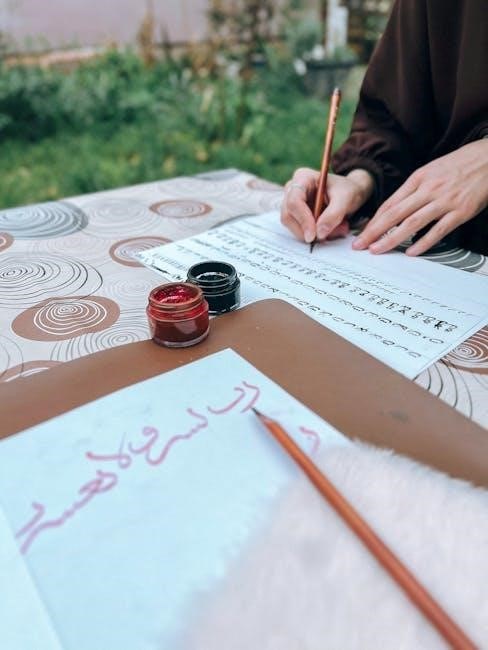
PDF versions offer the convenience of printing and repeated use‚ making them ideal for both home and classroom settings.
These worksheets often include both Arabic-only and Arabic-English versions‚ catering to different learning preferences and levels.
Combined with audio resources‚ these worksheets create a multi-sensory learning experience‚ solidifying letter recognition and pronunciation skills.
Noorani Qaida and Basic Tajweed Rules (PDF)
The Noorani Qaida‚ frequently found as a PDF resource‚ serves as a foundational text for learning the correct pronunciation of the Arabic alphabet and the rules of Tajweed – the science of reciting the Quran with proper articulation.
This text systematically introduces the Arabic letters‚ their sounds‚ and how they combine‚ building a strong phonetic base.
PDF versions of the Noorani Qaida often include exercises and clear explanations of basic Tajweed rules‚ such as proper articulation points (makharij) and attributes (sifat) of sounds.
Learning these rules is crucial for accurate Quranic recitation and understanding.
Many PDF resources also provide accompanying audio recordings to demonstrate the correct pronunciation.
These materials are invaluable for beginners‚ offering a structured approach to mastering the fundamentals of Arabic pronunciation and Tajweed.
They bridge the gap between learning the alphabet and reciting the Quran beautifully and correctly.

The Arabic Alphabet in Quranic Studies
Arabic alphabet PDF resources emphasize Tajweed‚ the correct pronunciation‚ vital for understanding and reciting the Quran accurately and reverently.
Precise articulation is paramount.
Importance of Correct Pronunciation (Tajweed)
Tajweed‚ the science of correct Quranic pronunciation‚ is fundamentally linked to mastering the Arabic alphabet‚ and numerous PDF resources are dedicated to its study.
Accurate pronunciation isn’t merely about sounding correct; it profoundly impacts the meaning of the verses.
Incorrect articulation can alter the intended message‚ leading to misinterpretations.
PDF guides‚ often accompanying Arabic alphabet charts‚ detail the rules governing the pronunciation of each letter‚ including variations based on its position within a word.
These resources meticulously explain the characteristics of each consonant and vowel‚ emphasizing proper articulation points and the application of specific rules like idgham‚ ikhfa‚ and qalqalah.
The Noorani Qaida‚ frequently available as a PDF‚ serves as a foundational text for learning Tajweed‚ systematically introducing the letters and their correct pronunciations.
Mastering Tajweed demonstrates respect for the divine text and ensures a faithful transmission of its message.
Therefore‚ utilizing Arabic alphabet PDF materials focused on Tajweed is crucial for any serious student of the Quran.
Arabic Alphabet and Quranic Script
The Arabic alphabet forms the very foundation of the Quranic script‚ and understanding its intricacies is paramount for accurate reading and interpretation.
While the alphabet itself consists of 28 letters‚ the Quranic script doesn’t always explicitly mark short vowels; instead‚ it relies on diacritical marks – harakat – to indicate them.
Numerous PDF resources showcase the Arabic alphabet alongside examples of its application within Quranic verses.
These PDF charts often highlight the different forms each letter takes depending on its position within a word (isolated‚ initial‚ medial‚ final).
Furthermore‚ they demonstrate how these forms are consistently applied in the Quranic text.
Learning resources‚ including the Noorani Qaida available as a PDF‚ emphasize recognizing these letter variations within the context of Quranic words.
Understanding the connection between the Arabic alphabet and the Quranic script unlocks a deeper appreciation for the beauty and precision of the divine revelation.
Therefore‚ studying Arabic alphabet PDF materials specifically geared towards Quranic script is highly beneficial.