Festool Parallel Guide: A Comprehensive Overview (04/07/2026)
Today, April 7th, 2026, marks a deep dive into the Festool Parallel Guide, exploring its functionality,
adaptability with MFT/3 systems via 3D printed adapters, and precision adjustments for repeatable cuts.
What is a Festool Parallel Guide?
The Festool Parallel Guide is a precision tool designed to enhance the capabilities of Festool guide rails, enabling highly accurate and repeatable rip cuts. Originally a Festool product, users have sought ways to integrate it with other systems, notably the MFT/3 workstation.
This integration is often achieved through 3D printed adapters, allowing the parallel guide to mount directly onto the MFT/3 surface. The core benefit lies in its ability to adjust the cutting width with exceptional precision, ranging from 1mm to 220mm on the X-axis.
Furthermore, the Y-axis adjustment leverages the existing MFT/3 protractor, providing a broad range dependent on the guide rail length. The system facilitates narrow, repeatable cuts by positioning stops directly to the kerf, making it ideal for detailed woodworking projects requiring consistent dimensions.
Core Functionality and Benefits
The Festool Parallel Guide’s primary function is to deliver unparalleled accuracy in rip cuts, particularly when consistent narrow dimensions are required. Its adjustable stops, positioned close to the blade’s kerf, allow for repeatable cuts down to 1mm.
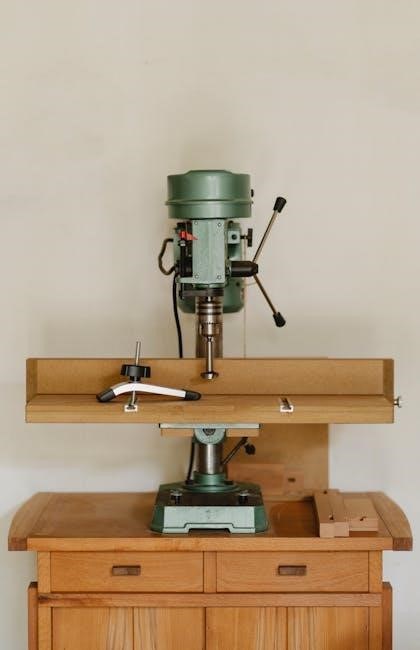
A key benefit is the enhanced precision gained when paired with the MFT/3 workstation, utilizing the existing protractor for Y-axis adjustments. This setup provides a substantial adjustment range, adaptable to various rail lengths.
Users appreciate the ability to quickly adjust settings from the top of the system and directly read scales for accurate measurements. The integration with Incra T-Track Plus further expands its versatility, making it a valuable asset for detailed woodworking and precise project execution.
Festool Parallel Guide vs. Alternatives
When considering the Festool Parallel Guide, it’s crucial to compare it to competing systems. TSO Products offers a parallel guide system praised for its build quality and compatibility with Festool guide rails, becoming a strong contender and potential upgrade path.
Woodpecker Parallel Guides are also noted for their quality, though often at a higher price point. Conversely, initial impressions of Bora Parallel Guides suggest stiffness along the guide rail, potentially hindering smooth operation.

The Festool system distinguishes itself through its adaptability with the MFT/3, enabled by 3D-printed adapters, offering a unique level of integration and precision not readily available in alternative solutions.
TSO Products Parallel Guide System
TSO Products presents a compelling alternative to the Festool Parallel Guide, offering a complete parallel guide system designed for compatibility with Festool guide rails. Users highlight the system’s robust construction and well-engineered design, particularly praising their track squares for their precision and durability.
Many suggest that the TSO system is a viable, and potentially superior, option for those seeking a parallel guiding solution. Some even express intent to replace existing Festool setups with TSO products, indicating a high level of satisfaction.
The TSO system provides a readily available, off-the-shelf solution, potentially eliminating the need for 3D-printed adapters required for full MFT/3 integration with the Festool guide.
Woodpecker Parallel Guides
Woodpecker Parallel Guides emerge as another strong contender in the parallel guiding arena, often favorably compared to Festool’s offering. A notable, albeit humorous, characteristic mentioned is their “gold-plated” finish, suggesting a premium build quality and aesthetic appeal.
Users suggest that Woodpecker guides are likely to perform as well as, if not better than, the Festool system, offering a comparable level of precision and reliability. This positions them as a serious alternative for woodworkers prioritizing quality and accuracy.
While specific details regarding features are limited in the provided context, the positive sentiment indicates Woodpecker provides a robust and well-regarded parallel guiding solution.
Bora Parallel Guides – Initial Impressions
Initial impressions of the Bora Parallel Guides are less enthusiastic compared to Festool or Woodpecker. A key concern raised is significant stiffness when used with the guide rail. This resistance creates friction, potentially hindering smooth and accurate cuts, and casting doubt on the system’s overall functionality.
The user expresses uncertainty about whether the Bora guides will perform adequately due to this initial issue. This suggests a potential problem with the design or manufacturing tolerances, impacting usability and precision.

The comment implies that, at the “very low end” of the price spectrum, the Bora guides may not deliver the performance expected from a parallel guiding system.
Adapters and Modifications for MFT/3 Compatibility
Achieving compatibility between Festool Parallel Guides and the MFT/3 workstation requires custom adapters. A user successfully designed and 3D printed adapters enabling mounting of the guides directly onto the MFT/3 table. This integration allows leveraging the Festool guide rails alongside the MFT/3’s versatility.
These adapters facilitate precise width adjustments using stoppers, simplifying repeatable, narrow cuts. The system utilizes the existing MFT/3 protractor for Y-axis adjustments, offering a broad range dependent on the rail length. The X-axis adjustment spans from 1mm to 220mm, providing fine control.
The adapter files are available for others to print, fostering a community-driven approach to enhancing Festool system functionality.
3D Printed Adapters for MFT/3 Mounting
The core of MFT/3 compatibility lies in user-created, 3D printed adapters. These adapters are specifically designed to bridge the gap between the Festool Parallel Guides and the MFT/3’s modular table system. They provide a secure and stable mounting solution, transforming the parallel guide into an integrated component of the workstation.
The design allows for easy installation and removal, maintaining the flexibility of the MFT/3. Sharing these files empowers other woodworkers to replicate the setup, fostering a collaborative environment. The adapters enable precise adjustments, leveraging the MFT/3’s existing features like the protractor for Y-axis control.
This DIY approach offers a cost-effective solution for integrating Festool accessories with the MFT/3 system.
Adjustability and Precision
The Festool Parallel Guide system excels in its adjustability, offering a substantial X-axis range of 1mm to 220mm. This broad spectrum caters to diverse project requirements, from delicate narrow cuts to wider ripping tasks. Precision is further enhanced by utilizing the standard MFT/3 protractor for Y-axis adjustments, allowing for accurate positioning along the guide rail’s length.
This combination provides a wide range of motion, adaptable to various rail lengths. The system’s design prioritizes repeatable accuracy, crucial for consistent results. Fine-tuning is simplified through easily accessible adjustment mechanisms, ensuring minimal setup time and maximum control over cut dimensions.
X-Axis Adjustment Range (1mm ー 220mm)
The defining feature of this system is its impressive X-axis adjustment capability, spanning from a remarkably precise 1mm to a substantial 220mm. This extensive range empowers woodworkers to tackle projects demanding both incredibly narrow and significantly wider cuts with a single setup. Achieving such versatility eliminates the need for frequent adjustments or multiple guide configurations.
This broad spectrum is particularly beneficial when creating intricate joinery or performing repetitive cuts requiring consistent width. The ability to dial in dimensions with such granularity ensures accuracy and efficiency. The system’s design prioritizes accessibility, making adjustments quick and straightforward, even for complex setups.
Y-Axis Adjustment Utilizing MFT/3 Protractor
Complementing the X-axis precision, the Y-axis adjustment leverages the existing functionality of the Festool MFT/3 protractor. This ingenious integration allows for a wide range of movement along the guide rail, effectively extending the system’s adaptability based on the rail’s length. Utilizing a tool already familiar to MFT/3 users streamlines the setup process and minimizes the need for additional accessories.
The protractor’s inherent accuracy translates directly to the parallel guide, ensuring consistent and reliable adjustments. This method provides a smooth and controlled sliding motion, facilitating precise positioning for various cutting scenarios. It’s a testament to the system’s thoughtful design, maximizing compatibility and user convenience.
Narrow Cut Capabilities
A standout feature of this Festool Parallel Guide system is its exceptional ability to execute remarkably narrow, repeatable rip cuts. The innovative positioning of the stops directly to the kerf – essentially zero – unlocks a level of precision previously difficult to achieve. This capability is invaluable for projects demanding tight tolerances and consistent results, particularly when working with smaller stock or intricate designs.
The design allows for adjustments directly from the top of the system, coupled with easily readable scales, simplifying the process of setting and verifying narrow dimensions. This eliminates guesswork and ensures accuracy, making it a powerful tool for both professional woodworkers and serious hobbyists.
Positioning Stops to the Kerf
The system’s meticulously designed stops enable positioning directly under the guide rail, right up to the blade’s kerf (0). This is a game-changer for achieving unparalleled accuracy in narrow rip cuts. By eliminating any gap between the stop and the cut line, the potential for even the slightest deviation is minimized, resulting in consistently precise results.
This feature isn’t merely about achieving small dimensions; it’s about repeatability. Once set, the stops maintain their position, allowing for multiple identical cuts with unwavering precision. This is particularly beneficial when creating components that require perfect matching, streamlining the workflow and reducing material waste.
Integration with Incra T-Track Plus

A cornerstone of the Parallel Guide System’s versatility lies in its seamless integration with Incra T-Track Plus. This compatibility unlocks a world of possibilities for customization and expandability, allowing users to leverage the robust and widely-adopted Incra ecosystem.
By utilizing Incra T-Track Plus, the parallel guide gains enhanced stability and adjustability. The T-Track provides a secure mounting platform, minimizing any potential for movement or vibration during operation. Furthermore, it facilitates the easy addition of accessories and modifications, tailoring the system to specific needs and workflows. This thoughtful design choice elevates the Festool Parallel Guide beyond a standalone tool.
Reading Scales for Accurate Adjustments
Precision is paramount when working with wood, and the Festool Parallel Guide delivers through thoughtfully designed reading scales. These scales aren’t merely an afterthought; they’re integral to the system’s functionality, enabling users to dial in exact cut widths with confidence.

The design allows for quick adjustments directly from the top side of the system, eliminating the need for cumbersome reaching or awkward angles. Crucially, the scales provide a direct readout of the cut width, minimizing the potential for errors. This feature is particularly valuable when performing repeatable cuts, ensuring consistency across multiple pieces. The clear, easily-readable scales contribute to a streamlined and efficient workflow.
Applications and Use Cases
The Festool Parallel Guide truly shines in scenarios demanding repeatable precision. A primary application lies in rip cuts requiring consistently narrow dimensions – a task often challenging with traditional methods. The ability to position stops directly to the kerf (blade width) unlocks unparalleled accuracy, especially when working with delicate materials or tight tolerances.
This system excels in projects like building drawers, creating precisely sized panels, or any woodworking endeavor where uniformity is key. The combination of the guide’s adjustability and the MFT/3 integration expands its versatility, making it suitable for both small-scale and large-scale projects. It simplifies complex cuts, saving time and reducing material waste.
Rip Cuts with Repeatable Narrow Dimensions
Achieving consistently narrow rip cuts is where the Festool Parallel Guide distinguishes itself. The system’s design allows positioning stops incredibly close – right up to the kerf – enabling accurate and repeatable cuts, even with minimal stock widths. This eliminates the common issue of narrow offcuts becoming unusable due to safety concerns or lack of control.
The X-axis adjustment range, spanning from 1mm to 220mm, provides exceptional flexibility. Coupled with the ability to read scales directly, setup becomes intuitive and precise. This feature is invaluable for projects demanding tight tolerances, such as fine furniture making or detailed joinery, ensuring professional-quality results with every pass.
Troubleshooting Common Issues

While generally reliable, Festool Parallel Guides can present occasional challenges. Stiffness, particularly noted with Bora parallel guides, can hinder smooth operation along the guide rail. Ensuring the guide rail itself is clean and free of debris is a crucial first step. If using 3D-printed adapters for MFT/3 compatibility, verify proper alignment and secure mounting – loose connections introduce unwanted play.
For precision, double-check scale readings and ensure the positioning stops are firmly locked in place. If encountering inconsistencies, consider the quality of the guide rail; damaged rails compromise accuracy. Comparing performance to alternative systems like TSO Products or Woodpecker guides can help isolate the issue.
Cost Considerations and Value
The initial investment in a Festool Parallel Guide system is substantial, reflecting Festool’s premium pricing. However, the value proposition extends beyond the cost of the guides themselves. Consider the potential savings from reduced material waste achieved through precise, repeatable cuts, especially for narrow dimensions.
Alternatives like TSO Products and Woodpecker offer competitive pricing, with TSO emerging as a favored option for many. Bora guides represent a budget-friendly entry point, though their stiffness may necessitate additional adjustments. Ultimately, the value hinges on your workflow; frequent, precision-demanding tasks justify the Festool investment, while occasional use may favor a more economical alternative.
Where to Purchase Festool Parallel Guides
Festool Parallel Guides are primarily available through authorized Festool dealers, both online and in brick-and-mortar stores. The official Festool website (www.festool.com) serves as a directory to locate nearby dealers and provides direct purchasing options.
Additionally, retailers specializing in woodworking tools, such as Rockler and Woodcraft, frequently stock Festool products. For alternatives and potentially competitive pricing, explore TSO Products’ website (https://tsoproducts.com/parallel-guide-system/), which offers their own parallel guide system. Online marketplaces like eBay and Amazon may also list Festool guides, but verifying seller authenticity is crucial to ensure genuine products.
Future Developments and Potential Enhancements
The Festool Parallel Guide system, while robust, presents opportunities for future innovation. Enhanced integration with the MFT/3 system beyond current 3D-printed adapter solutions could streamline workflow and improve stability. Refinements to the Y-axis adjustment mechanism, potentially incorporating a digital readout, would elevate precision.

Further development of the narrow stops, perhaps with micro-adjustment capabilities, would cater to increasingly demanding applications. Exploring compatibility with other track systems, like Incra T-Track Plus, beyond current utilization, could broaden appeal. Addressing the stiffness reported with Bora parallel guides could inspire design improvements. Ultimately, user feedback will drive future enhancements, solidifying the Festool Parallel Guide’s position as a premium woodworking tool.